
Introduction
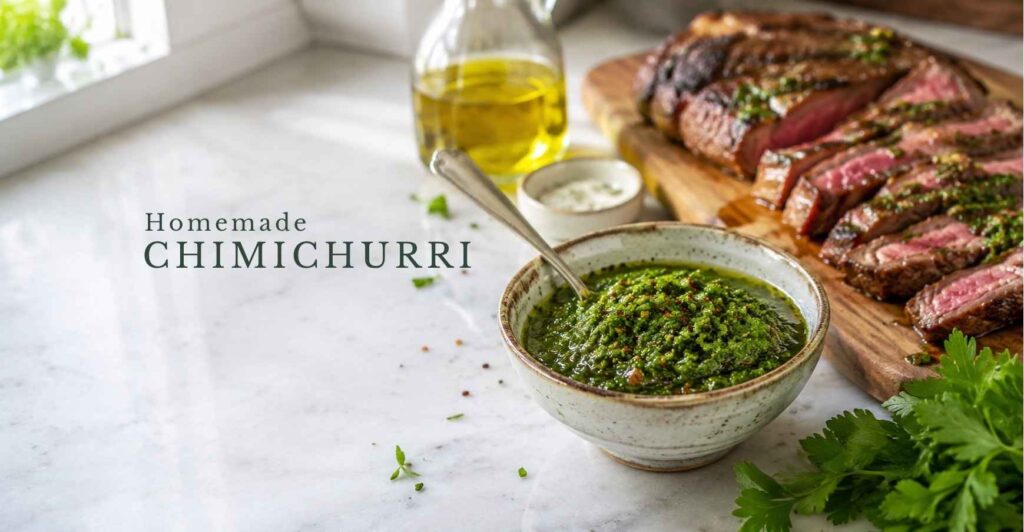
I make chimichurri more than any other sauce in my kitchen, and that’s not an exaggeration. It started maybe six years ago when I had a bunch of parsley that was about to go bad and some leftover steak from the night before. I threw together a rough sauce — parsley, garlic, olive oil, vinegar — and honestly, it changed the way I think about condiments. That little bowl of green saved dinner and became a permanent resident in my fridge.
This chimichurri recipe is the version I’ve landed on after years of small tweaks. It’s punchy from the red wine vinegar, a little warm from the red pepper flakes, and has that raw garlic bite that mellows out after it sits for a bit. The texture is loose and slightly chunky — not a smooth paste, not a pesto. It’s its own thing.
I reach for it on grilled steak (obviously), but also on roasted vegetables, scrambled eggs, and even crusty bread with butter. It takes about ten minutes, uses ingredients you probably already have, and it genuinely makes almost everything taste better.
Recipe Card
| Field | Value |
|---|---|
| Prep Time | 10 mins |
| Cook Time | 0 mins |
| Total Time | 10 mins |
| Servings | 8 (about 1 cup) |
| Cuisine | Argentine |
| Course | Sauce / Condiment |
| Difficulty | Easy |
| Calories | ~120 kcal per serving |
| Keywords | chimichurri recipe, chimichurri sauce recipe, chimichurri sauce, chimichurri recipes, how to make chimichurri sauce |
Why You’ll Love This
- It’s done in ten minutes. No cooking, no blender, no fuss. Chop, mix, done. You can make it while your steak rests.
- The flavor actually improves overnight. Make it ahead and the garlic softens, the herbs meld, and the whole thing becomes rounder and more complex by tomorrow.
- It goes with literally everything. Steak, chicken, fish, roasted cauliflower, eggs, sandwiches — I’ve even stirred it into rice. It’s the most versatile thing in my fridge.
- Fresh herbs do the heavy lifting. No fancy ingredients, no hard-to-find spices. Just good parsley, garlic, oil, and acid doing what they do best.
- It’s naturally gluten-free, dairy-free, and vegan. So it works for basically every table without any modifications.
Ingredients
Main Ingredients
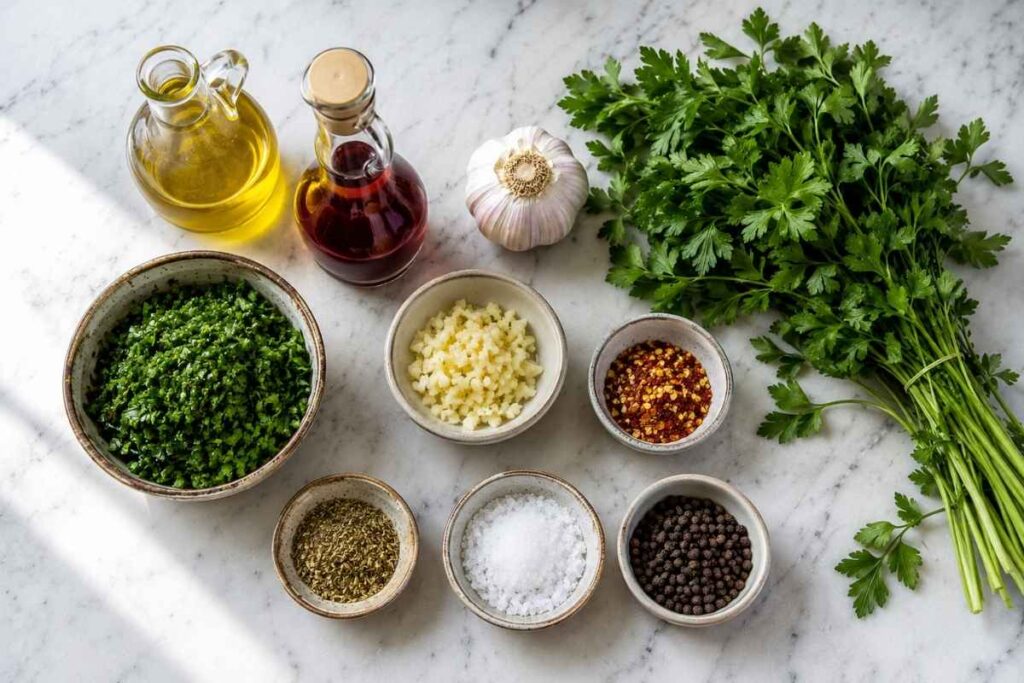
- 1 cup fresh flat-leaf parsley, finely chopped (about 1 large bunch)
- 3–4 cloves garlic, minced
- 2 tablespoons fresh oregano, finely chopped (or 2 teaspoons dried oregano)
- ⅓ cup red wine vinegar
- ½ cup extra-virgin olive oil
- ½ teaspoon fine sea salt
- ¼ teaspoon freshly ground black pepper
- ¼ teaspoon red pepper flakes (adjust to taste)
Optional Add-ins
- 1 tablespoon fresh cilantro, finely chopped (adds a slightly different herbaceous note)
- 1 small shallot, very finely minced
- 1 teaspoon lemon juice (for extra brightness)
For Garnish
- Extra drizzle of olive oil
- A pinch of flaky sea salt (like Maldon)
- A few whole parsley leaves
Ingredient Notes
Parsley: Flat-leaf (Italian) parsley is the one you want here. Curly parsley works in a pinch, but the flavor is milder and slightly more bitter. Flat-leaf has that peppery, grassy taste that makes chimichurri what it is. I usually grab two bunches to be safe — you want a full packed cup once it’s chopped.
Oregano: Fresh oregano is ideal. It has a softer, more fragrant flavor than dried. But dried oregano is a perfectly fine substitute — just use about a third of the amount (2 teaspoons instead of 2 tablespoons). One thing I’ve noticed is that dried oregano can taste a little dusty if it’s been sitting in your pantry for two years, so give it a sniff first.
Red wine vinegar: This is the acid that makes chimichurri sing. Don’t substitute with balsamic — it’s too sweet and too dark. White wine vinegar works if that’s what you have, and sherry vinegar is actually a nice upgrade. Apple cider vinegar is okay but changes the flavor profile noticeably.
Olive oil: Use a decent extra-virgin olive oil since it’s not being cooked. You’ll taste the oil directly, so this isn’t the place for the cheap stuff. It doesn’t need to be fancy — just something you’d be happy to dip bread in.
Garlic: Fresh garlic only. Please don’t use the pre-minced jar stuff here — it has a flat, almost metallic taste that takes over the sauce. Four cloves gives you a nice assertive garlic presence that will soften as the chimichurri sits.
Equipment Needed
- Sharp chef’s knife (a sharp knife makes this so much easier — dull knives bruise the herbs)
- Large cutting board
- Medium mixing bowl (glass or ceramic is best; metal can react with the vinegar)
- Measuring cups and spoons
- Jar with tight-fitting lid for storage
Step-by-Step Instructions
Step 1: Prep the parsley.
Strip the parsley leaves from their stems. You want mostly leaves — a few thin upper stems are fine, but discard the thick bottom stalks. Gather the leaves into a tight pile and chop them finely. You’re looking for small, uniform pieces — not a paste, not big leafy chunks. This should take about 3–4 minutes. The parsley should look like damp green confetti.
Beginner tip: Rock your knife back and forth in a half-moon motion rather than chopping straight down. It gives you more control and a more even chop.
Step 2: Mince the garlic and oregano.
Peel and mince the garlic cloves as finely as you can. You want them almost to a paste so they distribute evenly throughout the sauce. Finely chop the fresh oregano the same way. This takes about 2 minutes. Your cutting board should smell sharp and herby — that’s exactly right.
Beginner tip: To mince garlic super fine, sprinkle a pinch of salt on it and use the flat side of your knife to smash and scrape it across the board. The salt acts as an abrasive.
Step 3: Combine the dry ingredients.
Add the chopped parsley, minced garlic, oregano, red pepper flakes, salt, and black pepper to your mixing bowl. Toss everything together with a fork so it’s evenly mixed. It should look like a vibrant green herb mixture — fragrant and slightly damp from the natural moisture in the herbs. Takes about 30 seconds.
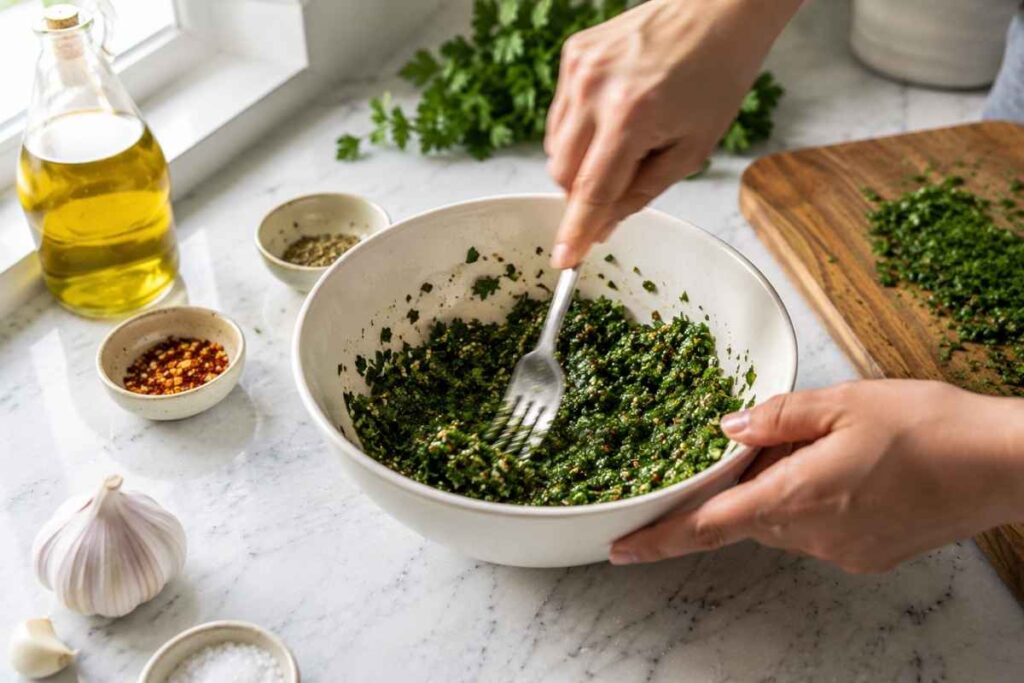
Step 4: Add the liquids.
Pour the red wine vinegar over the herb mixture first. Stir it in — you’ll notice the herbs brighten up a bit and the garlic scent sharpens. Then pour in the olive oil and stir everything together until it’s well combined. The consistency should be loose and spoonable — like a very chunky vinaigrette. This takes about 1 minute.
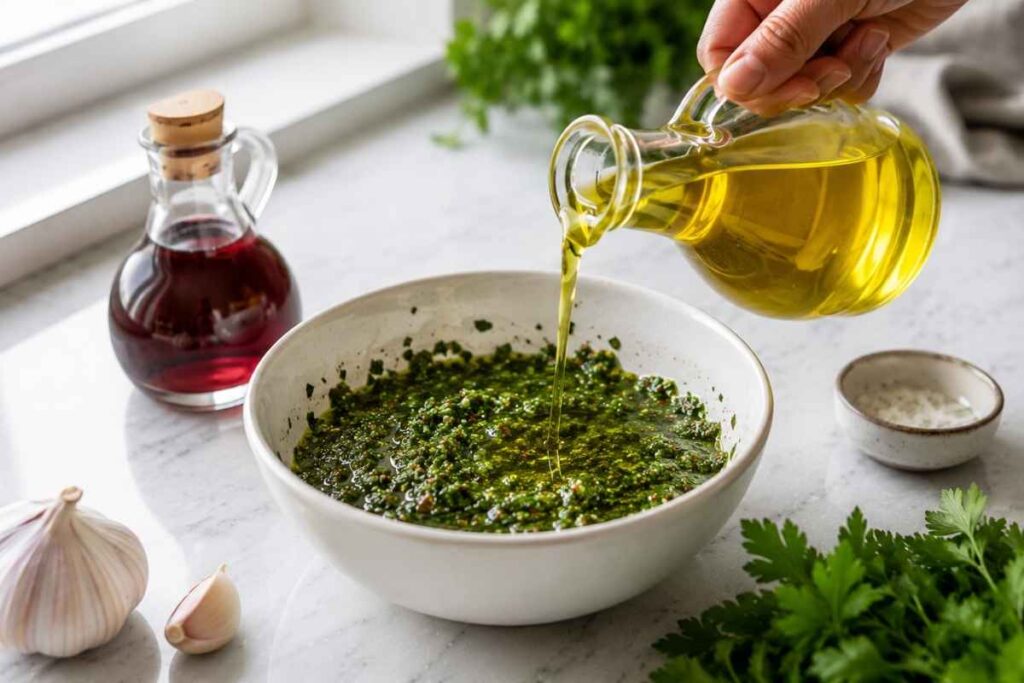
Beginner tip: Add the vinegar before the oil. The acid helps the herbs release their flavor more effectively than oil alone.
Step 5: Taste and adjust.
This is the most important step. Taste it. Does it need more salt? A little more vinegar for sharpness? More red pepper flakes for heat? I usually end up adding another pinch of salt and sometimes a tiny splash more vinegar. The flavors will meld and mellow as it rests, so it’s okay if it tastes slightly punchy right now.
Step 6: Let it rest.
Transfer the chimichurri to a jar or covered bowl and let it sit at room temperature for at least 15–20 minutes before serving. This is when the magic happens — the garlic softens, the vinegar mellows, and all the flavors start to come together. Honestly, it’s even better after a couple of hours in the fridge.
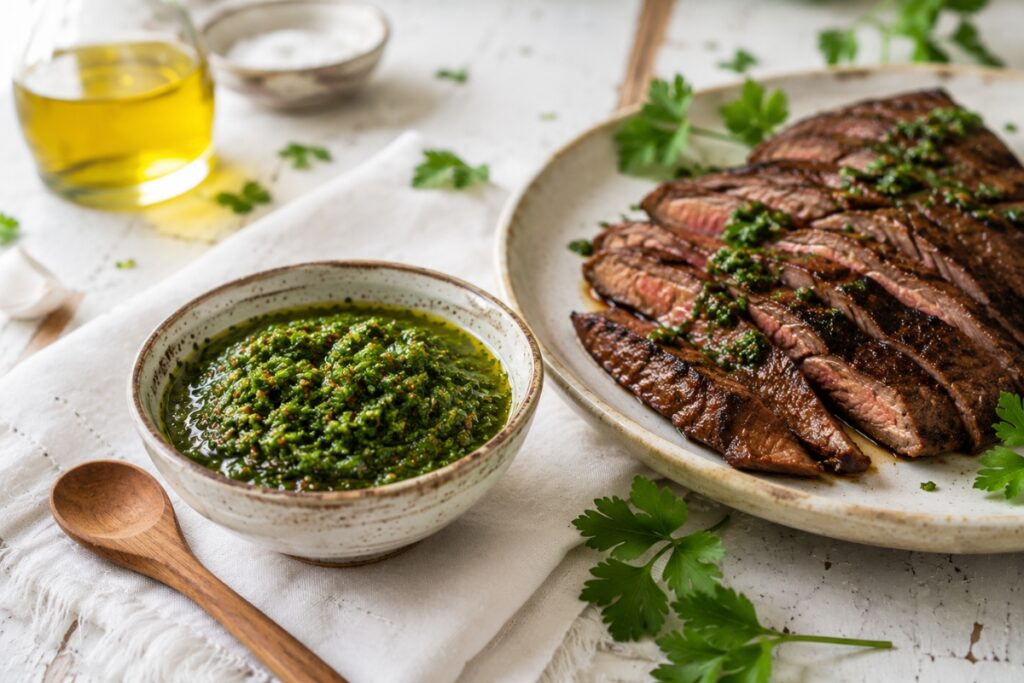
Beginner tip: If you’re making this for a dinner party, make it in the morning. It only gets better with time.
Common Mistakes
- Using a food processor and turning it into paste. A food processor makes chimichurri too smooth and can bruise the herbs, which turns them dark and slightly bitter. Hand-chopping gives you the right texture — loose, chunky, and bright green. If you absolutely must use a processor, pulse just 3–4 times.
- Skipping the resting time. Freshly made chimichurri is fine, but it’s noticeably better after 15–20 minutes. The raw garlic bite calms down and the vinegar integrates with the oil. Serving it immediately means the flavors are still separate and a little aggressive.
- Using too much dried oregano. Dried oregano is more concentrated than fresh, so if you swap it in at the same measurement, it’ll overpower everything and make the sauce taste like a pizza topping. Use about one-third of what the recipe calls for in fresh.
- Storing it in a metal container. The vinegar will react with certain metals and give the chimichurri a weird, tinny flavor. Use a glass jar, ceramic bowl, or plastic container.
Pro Tips
- Make a double batch. It keeps well and you’ll use it on everything this week. Trust me — one batch disappears faster than you think.
- Let it come to room temperature before serving. If it’s been in the fridge, pull it out 15 minutes before dinner. Cold chimichurri tastes muted. Room temp is where the flavors really open up.
- Press plastic wrap directly on the surface before putting the lid on. This prevents the top layer from oxidizing and turning dark.
- Use it as a marinade too. Coat chicken thighs or flank steak in chimichurri for 2–4 hours before grilling. The vinegar tenderizes the meat and the herbs infuse into it beautifully.
- Add a tablespoon of warm water if your chimichurri seems too thick after refrigerating. The olive oil solidifies a bit in the cold — a splash of warm water loosens it right back up.
Variations
Spicier Version
Add 1 finely minced fresh jalapeño or serrano pepper (seeds included for extra heat) and increase the red pepper flakes to ½ teaspoon. This version is great on grilled shrimp or tacos.
Kid-Friendly Version
Cut the garlic down to 1 clove, skip the red pepper flakes entirely, and add 1 teaspoon of honey to round out the vinegar sharpness. Most kids actually like the herby flavor — it’s the garlic and heat that tend to put them off.
Healthier Swap
Reduce the olive oil to ¼ cup and replace the other ¼ cup with fresh lemon juice. It’s lighter, a little more tart, and still delicious. Works especially well on fish and salads.
Chimichurri Rojo (Red Chimichurri)
Add 2 tablespoons of tomato paste and 1 roasted red bell pepper (finely chopped) to the base recipe. It’s a sweeter, smokier cousin of the green version and it’s spectacular on grilled sausages and crusty bread.
Serving Suggestions
- Grilled steak — the classic. Spoon it generously over a sliced flank steak or skirt steak.
- Roasted vegetables — cauliflower, sweet potatoes, and zucchini all come alive with chimichurri.
- Grilled chicken — drizzle over chicken thighs or breasts right off the grill.
- Crusty bread — serve a bowl alongside warm bread as a dip. Better than plain olive oil.
- Eggs — a spoonful over fried or scrambled eggs is genuinely one of the best breakfasts.
- Fish — works beautifully on grilled salmon or white fish like cod.
Drink pairing: A glass of Malbec is the Argentine classic. A crisp Sauvignon Blanc also works if you prefer white.
Presentation tip: Serve it in a small ceramic bowl with a tiny spoon. Drizzle a little extra olive oil on top and scatter a few whole parsley leaves. It looks beautiful and effortless.
Storage & Reheating
- Fridge: Store in an airtight glass jar for up to 7–10 days. The color may darken slightly on the surface — that’s normal oxidation, not spoilage. Just stir it up before using.
- Freezer: Yes! Chimichurri freezes well for up to 3 months. Freeze it in ice cube trays, then pop the cubes into a freezer bag. Each cube is roughly 1–2 tablespoons — perfect for pulling out just what you need.
- Reheating: No reheating needed — chimichurri is served at room temperature or cold. Just pull it from the fridge 10–15 minutes before serving so the olive oil loosens up and the flavors wake up.
Nutrition Info (Per Serving — about 2 tablespoons)
| Nutrient | Amount |
|---|---|
| Calories | ~120 kcal |
| Carbohydrates | 1 g |
| Protein | 0.3 g |
| Fat | 13 g |
| Fiber | 0.3 g |
| Sugar | 0.1 g |
| Sodium | 150 mg |
Note: Nutrition values are approximate and based on standard ingredient measurements. Your results may vary depending on exact brands and quantities used.
FAQs
Q: Can I make chimichurri in a blender or food processor?
A: I’d really recommend hand-chopping. A food processor tends to turn it into a smooth paste and can bruise the parsley, making it darker and slightly bitter. If you’re in a rush, use a food processor but only pulse 3–4 times — you still want visible herb pieces, not a green smoothie.
Q: How long does chimichurri last in the fridge?
A: About 7–10 days in a sealed glass jar. The top layer might darken a little, which is just oxidation and totally harmless. Stir it up before using. If it smells off or looks slimy, toss it — but in my experience, it rarely lasts that long because it gets eaten so quickly.
Q: Can I use dried parsley instead of fresh?
A: Honestly, no. Dried parsley has almost no flavor compared to fresh, and chimichurri is really all about that fresh herb taste and texture. This is one ingredient I wouldn’t substitute. Fresh parsley is cheap and easy to find — it’s worth the trip.
Q: Is chimichurri the same as pesto?
A: They’re similar in concept — both are herb-based sauces with oil — but they taste completely different. Pesto uses basil, pine nuts, and parmesan. Chimichurri uses parsley, vinegar, and no nuts or cheese. Chimichurri is also thinner, sharper, and more acidic. They’re not interchangeable.
Q: What’s the difference between chimichurri verde and chimichurri rojo?
A: Chimichurri verde (green) is the classic version with parsley, garlic, oil, and vinegar — that’s what this recipe is. Chimichurri rojo (red) adds roasted red peppers and sometimes tomato, making it sweeter and slightly smokier. Both are great, but verde is the more traditional one.
Q: Can I make chimichurri ahead of time?
A: Absolutely — in fact, I recommend it. Making it a few hours or even a day ahead gives the flavors time to meld together. The garlic mellows, the vinegar softens, and the whole sauce becomes more cohesive. It tastes good right away, but it tastes better after sitting.
Q: What’s the best cut of steak for chimichurri?
A: Flank steak and skirt steak are the traditional choices — they’re lean, flavorful, and the chimichurri’s acidity cuts through the meatiness perfectly. But it works on any steak: ribeye, strip, hanger, even a thick-cut sirloin. Grill it medium-rare, slice it thin against the grain, and spoon the chimichurri right on top.
Q: Is chimichurri spicy?
A: The base recipe has a gentle warmth from the red pepper flakes, but it’s not spicy-spicy. Most people — including kids with mild palates — can handle it. If you want more heat, add a minced jalapeño or increase the pepper flakes. If you want zero heat, just leave the flakes out entirely.
Final Thoughts
This chimichurri recipe is one of those things that’s so simple it almost feels like cheating. Ten minutes, a handful of fresh herbs, and you have a sauce that makes everything on your plate taste more alive. I keep a jar in my fridge almost constantly, and I’m always a little sad when I scrape out the last spoonful.
The best part is that it’s incredibly forgiving. A little more garlic, a little less vinegar, some cilantro tossed in — it’s all fine. Make it your own. That’s what cooking at home is really about anyway.
If you try this recipe, I’d genuinely love to hear how it turns out. Drop a comment, send me a photo, tell me what you put it on. I bet you’ll find new uses for it that I haven’t even thought of yet.