
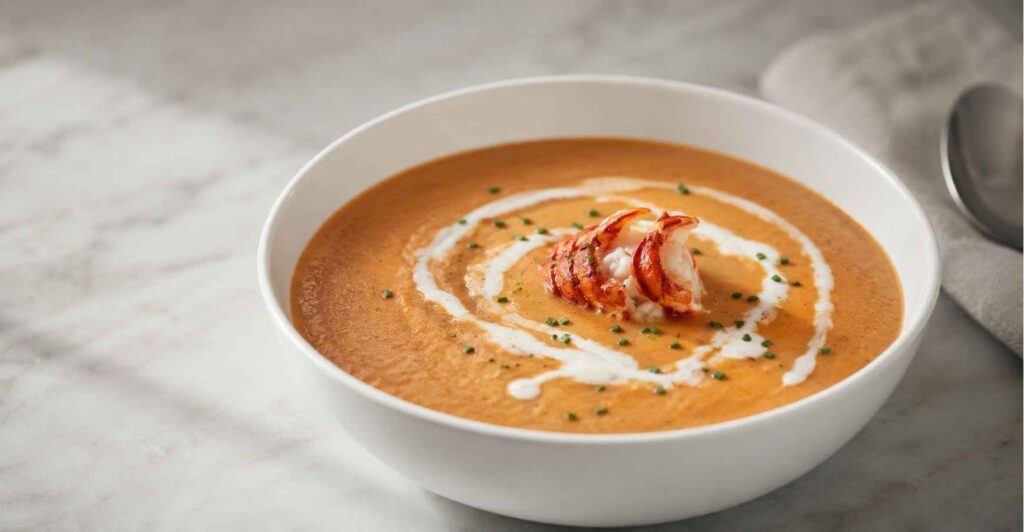
This lobster bisque recipe is the one I come back to every time I want to make something that feels genuinely special without booking a reservation. If you’ve ever had the bisque at Texas de Brazil, you know what I mean — that first spoonful is silky, deeply savory, and has this quiet richness that kind of stops you mid-conversation.
I’ve been working on this copycat version for a while now, and what makes it different from most recipes online is that I build the stock from actual lobster shells. That’s where all the depth comes from. It takes a little extra time, but it’s the thing that makes people ask, “Wait, you made this?”
I remember the first time I served this at a small dinner party — everyone went quiet for a second after the first taste, and honestly, that’s the best compliment a soup can get.
You’ll get a velvety, coral-colored bisque with tender lobster pieces, a gentle warmth from the sherry, and a cream finish that makes it feel like something from a white-tablecloth restaurant. It works beautifully as a holiday starter or a cozy Saturday night dinner. If you liked my Creamy Cajun Potato Soup, you’ll absolutely love this one.
Recipe Card
| Field | Value |
|---|---|
| Prep Time | 20 mins |
| Cook Time | 55 mins |
| Total Time | 1 hr 15 mins |
| Servings | 6 servings |
| Cuisine | American |
| Course | Appetizer / Soup |
| Difficulty | Medium |
| Estimated Calories | ~320 kcal (approximate — see disclaimer) |
| Estimated Cost | ~$8–12 per serving |
| Keywords | best lobster bisque recipe, lobster bisque recipe easy, trader joe’s lobster bisque recipe, homemade lobster bisque recipe, how to make lobster bisque from scratch |
Why You’ll Love This
- The flavor comes from real lobster shells — you’re building a stock that tastes like the ocean in the best possible way, not relying on bottled clam juice or bouillon cubes to do the heavy lifting.
- It’s smoother than almost any bisque you’ll get at a restaurant — blending and straining gives it this impossibly velvety texture that coats the back of a spoon.
- The sherry adds warmth without being boozy — it cooks down into this subtle sweetness that ties everything together in a way that plain white wine just can’t.
- You can make it a day ahead and it actually gets better — the flavors meld overnight, which makes it ideal for dinner parties where you don’t want to be chained to the stove when guests arrive.
- It looks like you spent all day in the kitchen — even though the hands-on work is really about 30 minutes once you get the hang of it.
See More : Molokai Chicken – Hawaiian Bros Chicken Recipe
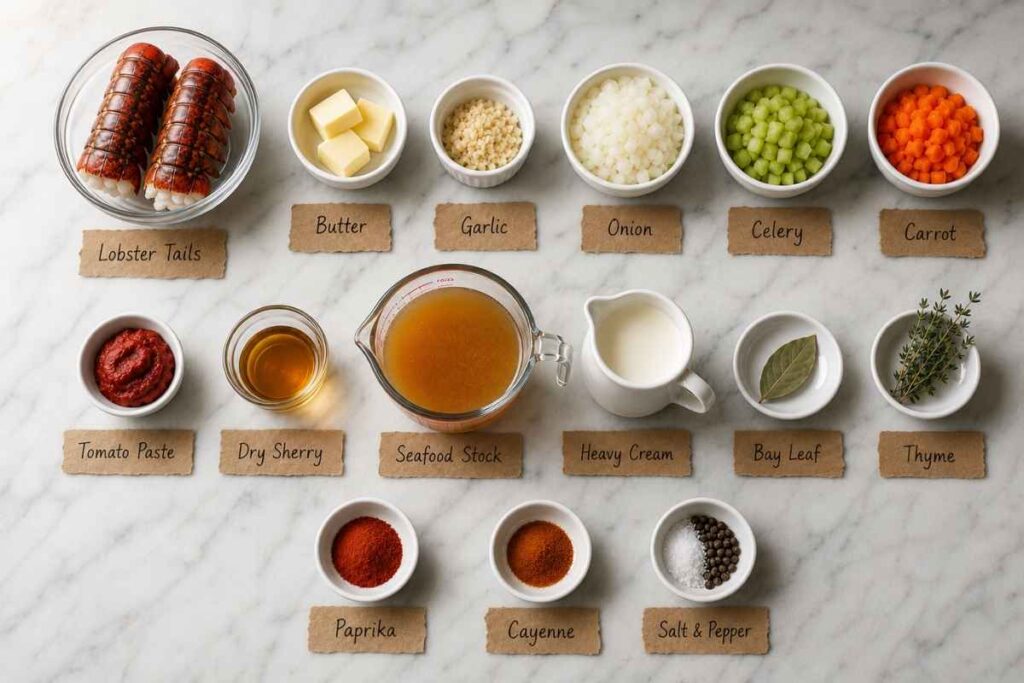
Ingredients
Main Ingredients
- 3 lobster tails (6–8 oz / 170–225 g each), thawed if frozen
- 4 tablespoons (½ stick / 57 g) unsalted butter
- 1 medium yellow onion, diced (about 1 cup / 150 g)
- 2 stalks celery, diced (about ½ cup / 60 g)
- 1 medium carrot, diced (about ½ cup / 65 g)
- 3 cloves garlic, minced
- 2 tablespoons tomato paste
- ⅓ cup (80 ml) dry sherry
- 4 cups (960 ml) lobster shell stock (made in Step 2)
- 1 cup (240 ml) heavy cream
- 1 bay leaf
- 3–4 sprigs fresh thyme (or ½ teaspoon dried)
- ½ teaspoon smoked paprika
- Pinch of cayenne pepper
- Salt and freshly ground black pepper, to taste
Optional Add-ins
- 1 tablespoon brandy or cognac (added with the sherry for extra depth)
- 1 teaspoon truffle oil (drizzled on top just before serving)
- 1 tablespoon dry white wine (in addition to or instead of sherry)
For Garnish
- Fresh chives, finely chopped
- A small swirl of heavy cream
- Reserved lobster tail meat, diced
Ingredient Notes
The lobster tails are the star, obviously. Fresh is ideal, but high-quality frozen tails from Costco or your local fish counter work perfectly. Cold-water tails (from Maine or Canada) tend to have sweeter, more tender meat. Warm-water tails work too, but the texture can be slightly chewier. Don’t skip the shell stock — that’s the single biggest difference between a bisque that tastes homemade and one that tastes made at home.
The sherry is non-negotiable. I’ve tried this with white wine, and it’s fine, but the sherry gives it that particular nutty warmth that makes you think of Texas de Brazil. Go for a dry sherry (fino or amontillado), not cream sherry — cream sherry makes it cloying. A decent $8–10 bottle is all you need. If you absolutely can’t do alcohol, you can substitute 2 tablespoons of sherry vinegar mixed with 2 tablespoons of chicken stock, but I’ll be honest — it’s noticeably different.
Tomato paste adds color and a savory backbone. Any brand works here — this isn’t the place to splurge. The tube kind is convenient since you only need 2 tablespoons.
Heavy cream — use the real stuff. Half-and-half will work in a pinch, but the bisque won’t have that same luxurious body. This is not the recipe to go light on dairy.
For the smoked paprika, even a small amount gives a subtle smokiness that rounds out the lobster flavor. Regular paprika is fine if that’s what you have, you’ll just miss that faint campfire note.
Equipment Needed
- Large stockpot (for boiling lobster tails and making stock)
- Large Dutch oven or heavy-bottomed pot (5–6 quart)
- Immersion blender or countertop blender (immersion is far easier for cleanup)
- Fine-mesh strainer (this is what gives you that silky texture — don’t skip it)
- Kitchen shears or a sharp knife (for cutting lobster shells)
- Ladle
Step-by-Step Instructions
Step 1: Cook the Lobster Tails
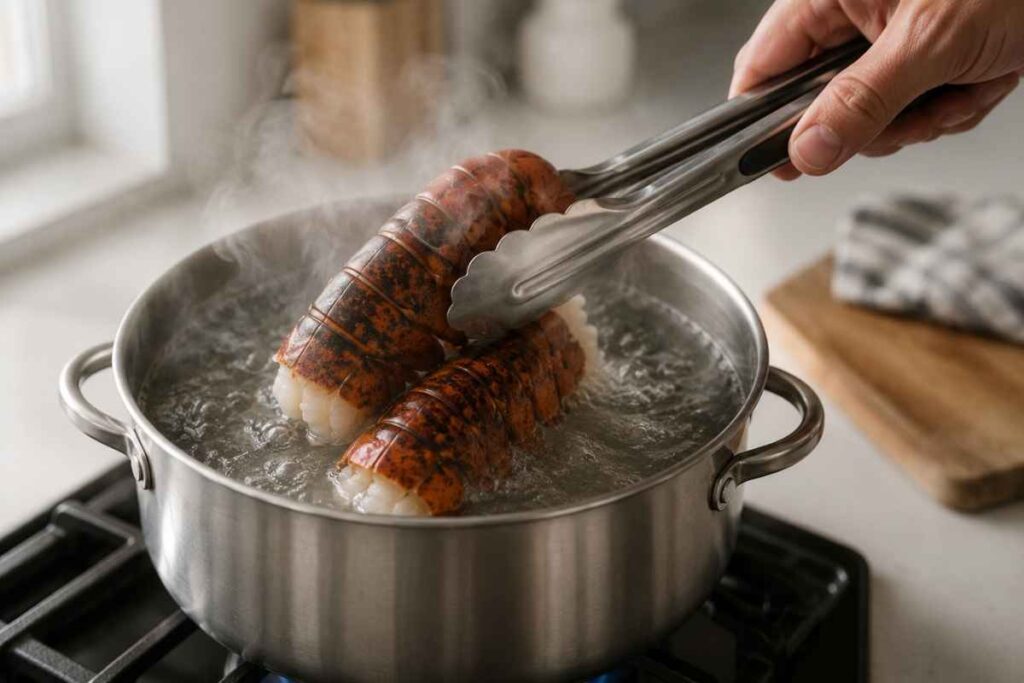
Bring a large pot of salted water to a rolling boil. Add the lobster tails and cook for 5–6 minutes until the shells turn bright red and the meat is opaque and just cooked through. You’ll know they’re ready when the meat pulls away slightly from the shell at the wide end. Pull them out with tongs and transfer to an ice bath or a plate to cool. Don’t overcook them — they’ll go into the bisque later and will warm through again.
Once cool enough to handle, use kitchen shears to cut along the underside of each tail. Pull the meat out in whole pieces. Reserve the shells — they’re essential. Roughly chop the lobster meat into bite-sized pieces and set aside in a bowl covered with plastic wrap.
Step 2: Make the Lobster Shell Stock
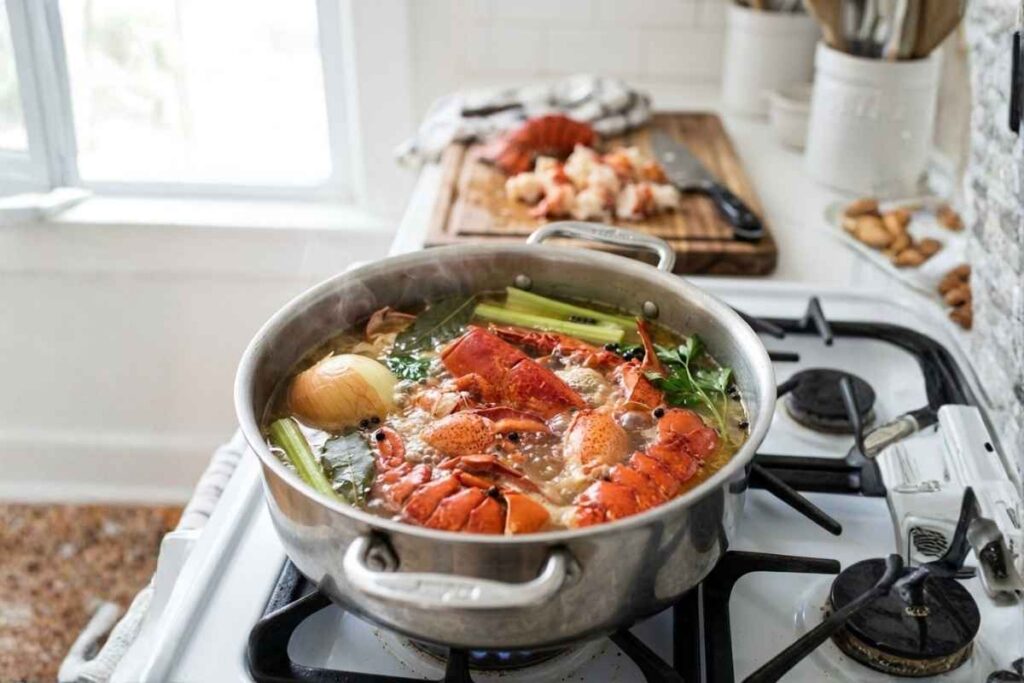
Take those reserved shells and break or cut them into smaller pieces — the more surface area, the more flavor you extract. Toss them back into the same pot you boiled the lobster in (keep the cooking water). Add a halved onion, a celery stalk, a bay leaf, and a few peppercorns. Bring to a gentle simmer and let it go for 25–30 minutes. The liquid should turn a beautiful pale gold with a distinct lobster aroma — your kitchen will smell incredible.
Strain through a fine-mesh strainer into a large measuring cup or bowl. Press on the shells with the back of a spoon to extract every drop of flavor. You should have about 4 cups of stock. Discard the shells and aromatics.
One thing I’ve noticed is that the longer you simmer (up to 40 minutes), the more intense the stock gets. Just don’t let it boil hard — a gentle simmer is what you want.
Step 3: Sauté the Aromatics
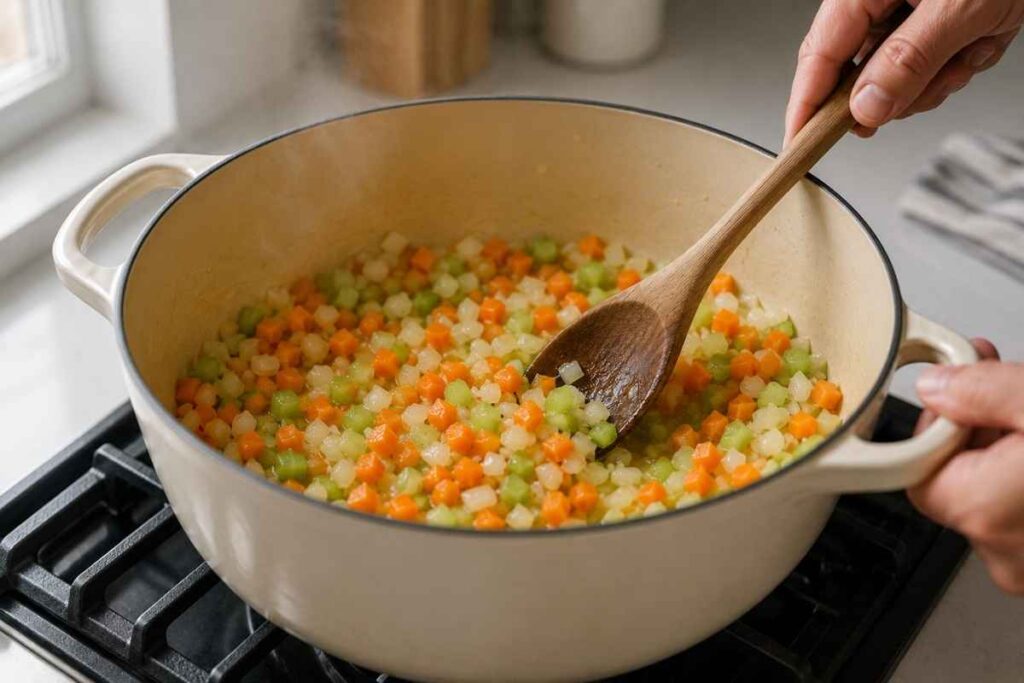
In a large Dutch oven, melt the butter over medium heat. Once it’s foaming and the foam starts to subside (about 1–2 minutes), add the diced onion, celery, and carrot. Stir everything so it’s coated in butter. You should hear a steady, gentle sizzle — not aggressive popping.
Cook for about 6–7 minutes, stirring occasionally, until the onions are translucent and soft and the carrots have just started to yield when you press them with a spoon. The kitchen should smell sweet and buttery at this point. Don’t rush this — the vegetables need to soften completely because they’ll become part of the bisque’s body later.
Step 4: Add the Tomato Paste and Garlic
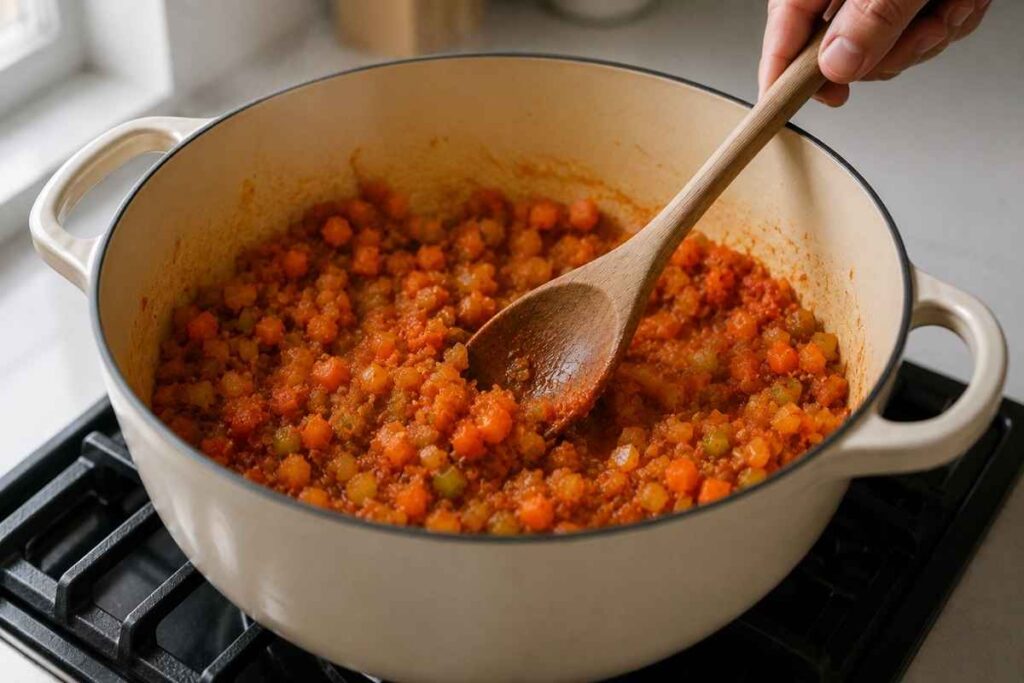
Push the vegetables to the side and add the minced garlic to the center of the pot. Let it cook for about 30 seconds — you want it fragrant but nowhere near brown. Then add the tomato paste and stir everything together for 1–2 minutes. The paste will deepen in color from bright red to a rust-orange as it cooks, and you’ll get this concentrated, savory aroma.
This step is where the bisque starts to develop its signature coral color. I usually stir constantly here because tomato paste can burn quickly on the bottom of the pot if you walk away.
Step 5: Deglaze with Sherry
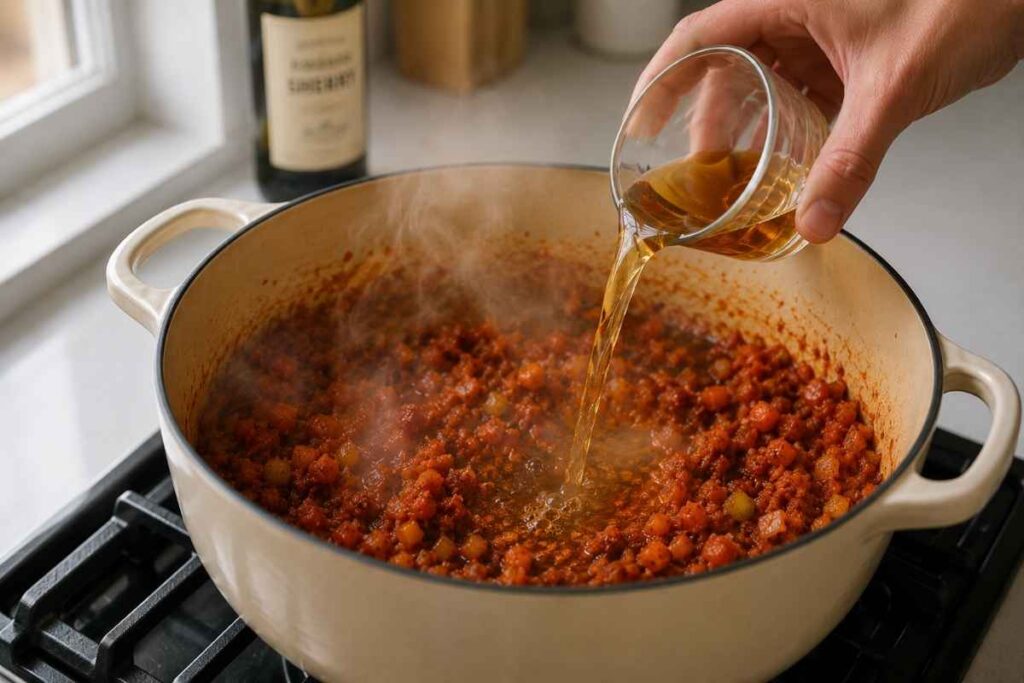
Pour in the dry sherry and stir immediately, scraping up any browned bits from the bottom of the pot with a wooden spoon. You’ll hear a satisfying sizzle and a cloud of fragrant steam will rise — that’s the alcohol cooking off and leaving behind all the good stuff.
Let the sherry reduce for about 2–3 minutes until most of the liquid has evaporated and the pot looks almost dry again. It should smell warm and nutty, not sharp or boozy. If you’re adding brandy as well, add it now alongside the sherry.
Step 6: Add the Lobster Stock and Simmer
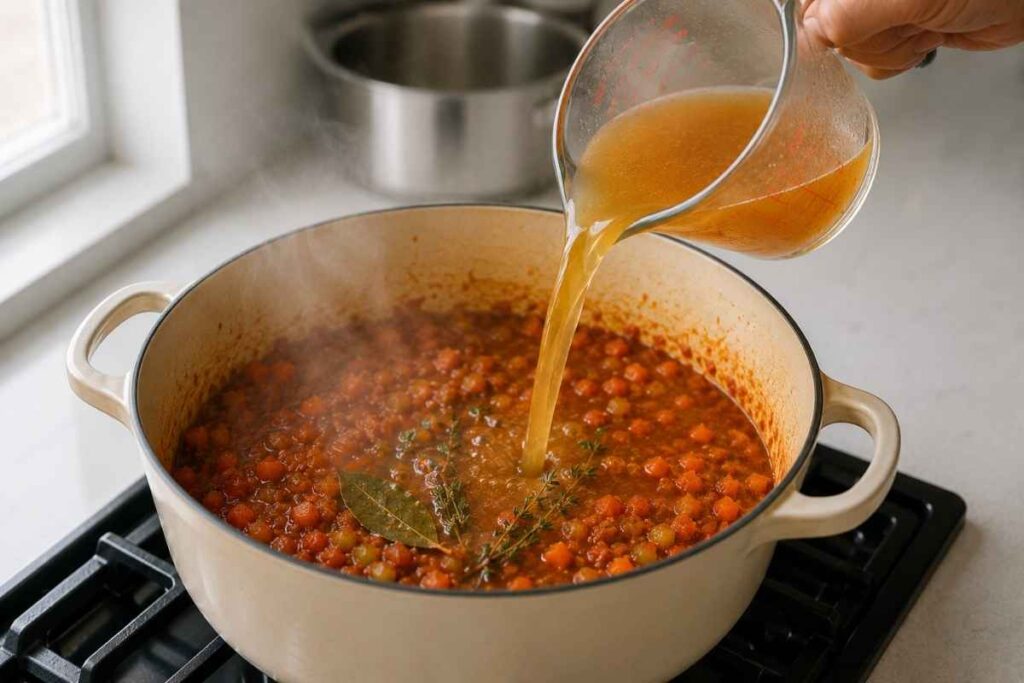
Pour in the 4 cups of homemade lobster shell stock. Add the bay leaf, thyme sprigs, smoked paprika, and cayenne. Give everything a good stir and bring to a gentle boil, then reduce the heat to low and let it simmer uncovered for 20 minutes.
The bisque will reduce slightly and thicken as the vegetables break down further. By the end of the simmer, it should look like a chunky, richly colored soup — not pretty yet, but the flavor will be deep and complex. Taste it — you should get lobster, a hint of smoke, and a gentle warmth from the cayenne.
Remove and discard the bay leaf and thyme sprigs before moving to the next step.
Step 7: Blend Until Silky Smooth
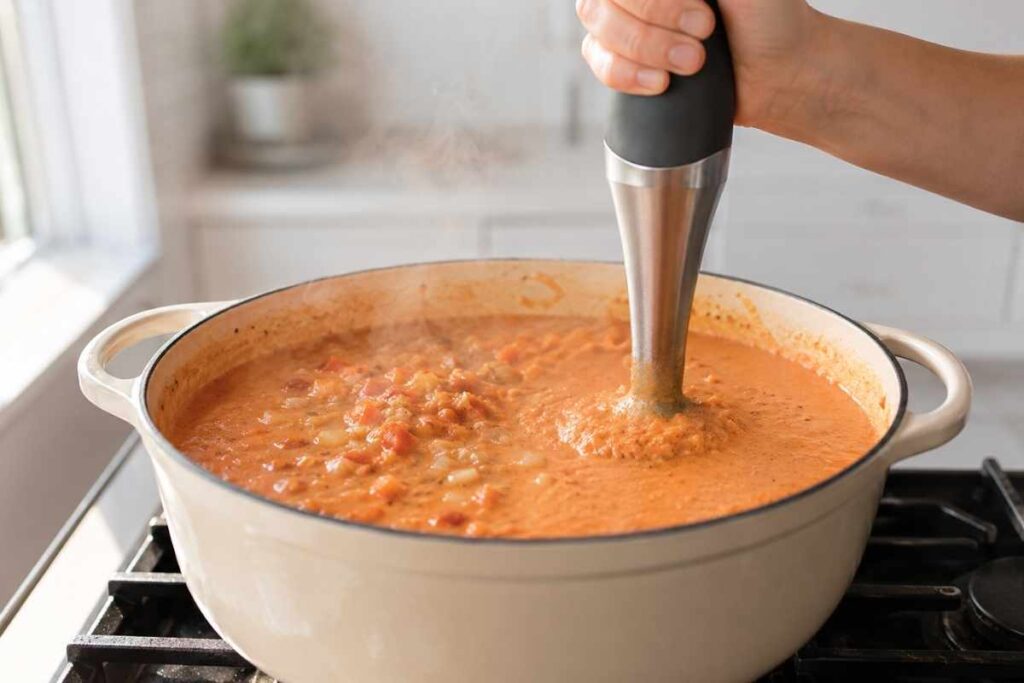
Using an immersion blender, puree the soup directly in the pot for 2–3 minutes until completely smooth. Move the blender around to catch every chunk — you want zero texture here, just pure silk.
If using a countertop blender, work in batches and never fill it more than halfway — hot soup expands and can blow the lid off (trust me, I learned this the hard way). Hold the lid down with a towel.
Here’s the step that separates a good bisque from a great one: strain it. Pour the blended bisque through a fine-mesh strainer back into the pot, pressing the solids with the back of a ladle. You’ll lose a tablespoon or two of pulp, but what comes through is impossibly smooth — the kind of texture you get at a high-end steakhouse.
Step 8: Finish with Cream and Lobster Meat
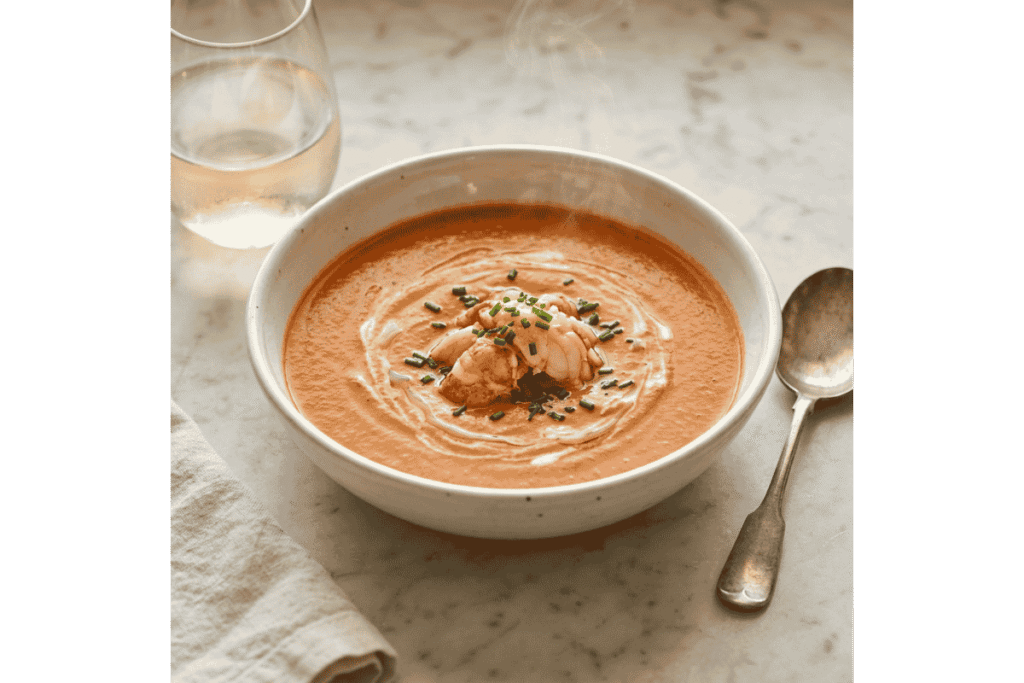
Return the strained bisque to medium-low heat. Pour in the heavy cream and stir gently for 3–4 minutes until the bisque is heated through and the cream is fully incorporated. The color will shift from deep coral to a beautiful creamy salmon — that’s exactly what you want.
Gently fold in the reserved chopped lobster meat and let it warm through for another 2 minutes. Season with salt and black pepper to taste. I usually add about ¾ teaspoon of salt at this point, but go by taste — the stock may already have some salinity.
The bisque should coat the back of a spoon and have a luxurious, pourable consistency — not thick like chowder, not thin like broth. If it’s a touch thick, add a splash more stock. If it’s too thin, let it simmer uncovered for another 5 minutes.
Common Mistakes
Adding garlic too early. Garlic burns in about 30 seconds in a hot pan and turns bitter fast. Add it after the vegetables have already softened, cook it just until fragrant, and move on immediately to the tomato paste. If your garlic goes dark brown, start over — that bitterness will carry through the entire bisque.
Skipping the straining step. I know it feels like extra work, but this is the difference between “homemade soup” and “how did you make this.” The strainer catches tiny bits of shell, herb stems, and vegetable fiber that the blender can’t fully break down. It takes 3 minutes and the payoff is enormous.
Boiling the cream. Once you add the heavy cream in Step 8, keep the heat at medium-low. If the bisque boils after the cream goes in, you risk it breaking — the fat separates and you get an oily, grainy texture instead of smooth and velvety. Gentle heat is everything here.
Overcooking the lobster meat. The tails are already cooked in Step 1. When you fold the meat back in at the end, you only need 2 minutes to warm it through. Any longer and the lobster turns rubbery and chewy — which defeats the entire purpose.
Pro Tips
- Save a few perfect lobster pieces for garnish. Before you chop all the meat, slice 6 thin medallions from the widest part of the tails. Set them aside and place one on top of each bowl when serving. It makes the presentation look thoughtful with almost zero extra effort.
- Make the stock the night before. The shell stock holds beautifully in the fridge for up to 2 days. This splits the work in half and means you can go from “raw ingredients” to “bisque on the table” in about 35 minutes on the day you serve it.
- A tiny pinch of cayenne goes a long way. You shouldn’t taste heat — you should taste warmth. Start with less than you think and add more only after tasting. I use about ⅛ teaspoon for 6 servings.
- Warm your serving bowls. Run them under hot water or put them in a 200°F (95°C) oven for 5 minutes before ladling. Bisque cools quickly, and a warm bowl keeps it at the right temperature all the way through the last spoonful.
- Leftover bisque makes an incredible pasta sauce. Toss it with linguine, add a squeeze of lemon, and top with parmesan. Sounds weird, tastes unbelievable.
See More : Chimichurri Sauce Recipe
Variations
Lazy Shortcut Version
If you don’t want to make lobster stock from scratch, use 4 cups of high-quality store-bought seafood stock (Kitchen Basics or Bar Harbor are solid options). Add the lobster shells to the pot during Step 6 and strain them out before blending. You won’t get quite the same depth, but it’s still leagues better than most bisque recipes.
Spicier Version
Double the cayenne to ¼ teaspoon and add 1 teaspoon of hot smoked paprika instead of regular smoked paprika. For serious heat, stir in a few dashes of your favorite hot sauce at the very end — Crystal or Cholula work well without overpowering the lobster.
Lighter Version
Substitute half the heavy cream with whole milk. The bisque will be slightly thinner and less rich, but still plenty creamy. You can also reduce the butter from 4 tablespoons to 2 — the sherry and stock carry enough flavor to handle it.
Shrimp-Lobster Bisque
Add ½ pound of raw shrimp (peeled and deveined) to the stock in Step 2 for extra seafood depth. Remove them after 3 minutes, chop them up, and fold them in with the lobster meat in Step 8. The combo is honestly ridiculous.
Serving Suggestions
- As a starter: Serve in small cups or demitasse bowls before a steak dinner — exactly the way Texas de Brazil does it. About ¾ cup per person is the right amount so guests still have room for the main course.
- As a main course: Ladle generous portions into wide bowls and serve with thick slices of crusty sourdough bread for dipping. A simple arugula salad with lemon vinaigrette on the side keeps it from feeling too heavy.
- Drink pairing: A glass of unoaked Chardonnay or a crisp Sauvignon Blanc works beautifully — the acidity cuts through the cream. Sparkling water with lemon is great too if you’re keeping it simple.
- Presentation tip that actually matters: Drizzle the cream swirl from about 6 inches above the bowl and drag a toothpick through it in a quick figure-eight. Takes 5 seconds and looks like you went to culinary school.
Storage & Reheating
| Method | Details |
|---|---|
| Fridge | Lasts 3–4 days in an airtight container. The bisque will thicken as it cools — that’s normal. Store the lobster meat separately if possible (it stays more tender that way). |
| Freezer | Yes — freezes well for up to 2 months. Freeze without the lobster meat (freeze the meat in a separate bag). Thaw overnight in the fridge before reheating. The texture may be very slightly less smooth after thawing, but a quick blitz with the immersion blender fixes it. |
| Reheat | Stovetop over medium-low heat, stirring frequently, for about 5–7 minutes. Add a splash of cream or stock if it’s thickened too much. Do not microwave if you can avoid it — microwaving tends to heat unevenly and can cause the cream to break in spots. If you must microwave, use 50% power in 1-minute intervals, stirring between each. |
Nutrition Information (Per Serving)
DISCLAIMER: These values are approximate estimates based on standard ingredient measurements. For accurate nutrition information, use a dedicated calculator like Nutritionix, MyFitnessPal, or the USDA database with your exact ingredients and quantities.
| Nutrient | Approximate Amount |
|---|---|
| Calories | ~320 kcal |
| Carbohydrates | ~12 g |
| Protein | ~18 g |
| Fat | ~22 g |
| Fiber | ~1 g |
| Sugar | ~4 g |
| Sodium | ~680 mg |
FAQs
Q: Can I use frozen lobster tails for this lobster bisque recipe? A: Absolutely. Thaw them overnight in the fridge or in a sealed bag under cold running water for about 30 minutes. Frozen tails work just as well as fresh in a bisque because the meat gets chopped and folded into a rich soup — you won’t notice a texture difference.
Q: What can I use instead of sherry in lobster bisque? A: Dry white wine (like Pinot Grigio) is the closest swap, though you’ll lose that nutty warmth. Brandy or cognac works too — use the same amount. For a non-alcoholic version, try 2 tablespoons of sherry vinegar mixed with 2 tablespoons of chicken stock. It won’t be identical, but it adds some of that tangy depth.
Q: How do I make lobster bisque without a blender? A: You can mash the vegetables with a potato masher after simmering, then strain through a fine-mesh strainer, pressing hard with the back of a ladle. It takes more effort and won’t be quite as silky, but it works. An immersion blender is a worthwhile $25 investment if you make soups regularly.
Q: Is this recipe similar to Trader Joe’s lobster bisque? A: Trader Joe’s lobster bisque is good for a grab-and-go option, but this homemade lobster bisque recipe has noticeably more depth because of the shell stock and the sherry. The Trader Joe’s version uses lobster base and cream — tasty, but it doesn’t have the same layered flavor you get from building the stock yourself.
Q: How do I know when the lobster tails are fully cooked? A: The shells turn bright red, the meat becomes opaque white with pink edges, and it pulls away slightly from the shell at the wide end. Internal temperature should be 140°F (60°C). For 6–8 oz tails, this takes 5–6 minutes in boiling water. When in doubt, cut into the thickest part — it should be white all the way through with no translucent spots.
Q: Can I make lobster bisque ahead of time? A: Yes, and it actually improves overnight. Make the full bisque, let it cool, and refrigerate. Reheat gently on the stovetop the next day, adding a splash of cream to loosen it. The flavors meld beautifully. Just fold in the lobster meat when you reheat so it stays tender.
Final Thoughts
Honestly, this is one of those recipes that seems fancier than it actually is — and I mean that as the highest compliment. Once you’ve made it twice, the whole process feels natural, and you’ll start eyeing lobster tails every time you walk past the seafood counter.
Make it your own. Try it with crab if lobster is out of budget. Add a pinch more cayenne if you like warmth. Serve it in tiny espresso cups at your next party and watch people’s faces.
I’d genuinely love to hear how yours turns out — drop a comment below or tag me if you post it. And if you’re looking for something to serve alongside, my Garlic Butter Steak Bites are the natural pairing.