
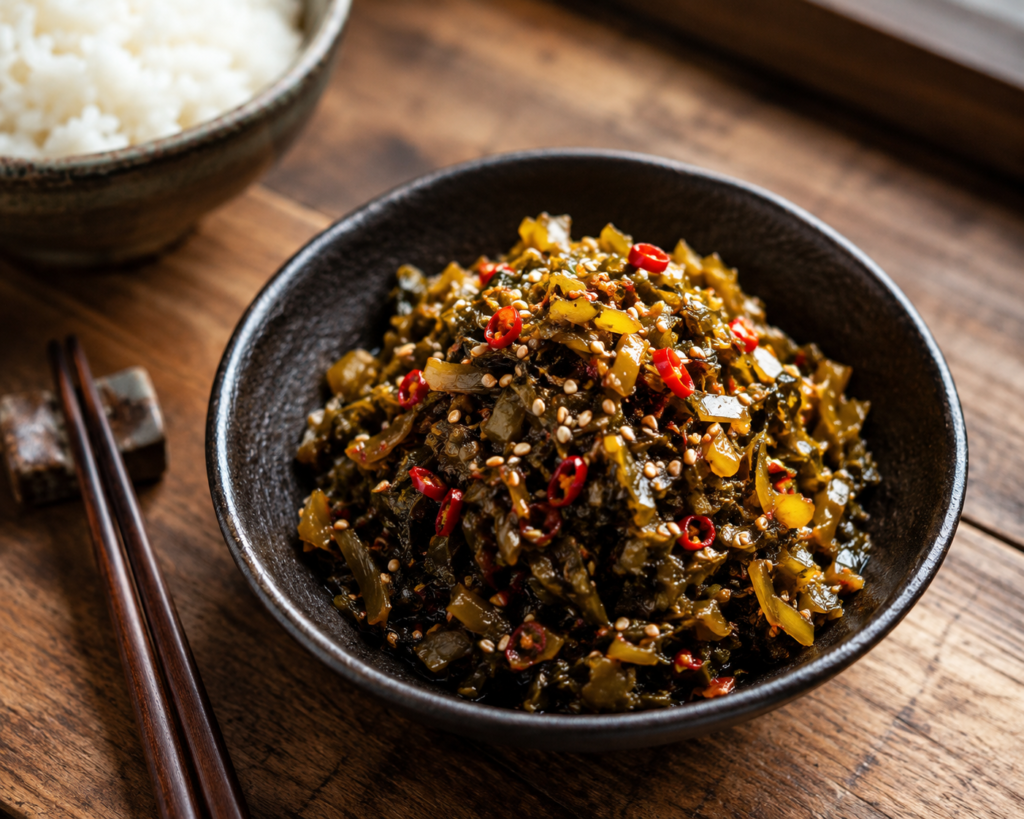
I still remember the first time I tasted karashi takana at a tiny izakaya in Kyushu, and honestly, my mouth was on fire in the best possible way. If your not familiar, karashi takana is a Japanese pickled mustard greens dish that’s spicy, tangy, and packed with so much umami you’ll wonder why you didnt try it sooner. Today I’m sharing my own version that I’ve been making at home for years now, tweaked just enough to be doable in a regular kitchen without any fancy equipment.
What Exactly Is Karashi Takana?
Takana refers to a type of mustard green thats really popular in Kyushu, especially around Kumamoto region. Karashi means “mustard” or “hot” in Japanese, so basically your getting a double whammy of spice from both the natural mustard-green flavor and the added chili heat. Its traditionally fermented, but there are quicker pickling methods too which is what most home cooks (including me) tend to use.
The dish is often served as a side to rice, mixed into fried rice (chahan), or even used as filling for onigiri. Once you make a batch, you’ll find yourself putting it on literally everything.
A Quick Look at the Dish
| Detail | Info |
|---|---|
| Origin | Kyushu, Japan (especially Kumamoto) |
| Main ingredient | Takana (mustard greens) |
| Flavor profile | Spicy, tangy, umami-rich |
| Prep method | Quick-pickle (traditional method is fermentation) |
| Active time | Under 30 minutes |
| Chill time | 2 hours minimum, overnight is better |
| Shelf life | Up to 1 week refrigerated |
Why This Recipe Works
I’ve tried probably a dozen different approaches to this over the years, and this one strikes the right balance between authentic flavor and something you can actually pull off on a Tuesday night. We’re using a quick-pickle method rather than true fermentation, which means less waiting and less risk of things going wrong. The greens stay crunchy, the spice level is adjustable, and it comes together in under 30 minutes of active time (plus chilling).
Ingredients
Here’s what your going to need:
| Ingredient | Amount |
|---|---|
| Takana (mustard greens) | 1 bunch, about 300g |
| Kosher salt | 2 tablespoons |
| Dried red chili peppers, sliced | 3 (adjust to taste) |
| Karashi (Japanese hot mustard) | 1 tablespoon |
| Soy sauce | 2 tablespoons |
| Rice vinegar | 1 tablespoon |
| Sesame oil | 1 teaspoon |
| Sugar | 1 tablespoon |
| Garlic, minced | 2 cloves |
| Ginger, grated | 1 inch |
| Toasted sesame seeds | 1 teaspoon, for garnish |
If you cant find takana specifically, mustard greens or even young turnip greens work as a decent substitute.
Step by Step Instructions
Prepping the Greens
Step 1: Wash and prep the greens.
Rinse the takana thoroughly under cold water, making sure to get any dirt out from between the leaves. Pat dry with a towel, then chop into 1-inch pieces, stems and leaves both.
Step 2: Salt them down.
Place the chopped greens in a large bowl and sprinkle with the kosher salt. Massage the salt into the leaves with your hands for about 2-3 minutes, your basically bruising them slightly to help release moisture and soften the texture. This is a step you really shouldnt skip.
Step 3: Let it rest.
Cover the bowl and let sit at room temperature for 20-30 minutes. You’ll notice liquid pooling at the bottom, thats exactly what you want.
Step 4: Squeeze out excess liquid.
After resting, squeeze handfuls of the greens firmly to remove as much liquid as possible. Don’t be shy here, really wring them out good.
Making the Seasoning and Combining
Step 5: Make the seasoning mix.
In a separate bowl, whisk together the karashi mustard, soy sauce, rice vinegar, sesame oil, sugar, minced garlic, and grated ginger until well combined.
Step 6: Combine everything.
Add the sliced chili peppers to the squeezed greens, then pour the seasoning mixture over top. Mix thoroughly with your hands or a spoon, making sure every piece gets coated.
Chilling and Serving
Step 7: Chill and marinate.
Transfer to an airtight container or jar and refrigerate for at least 2 hours, though overnight is even better for the flavors to really meld together.
Step 8: Serve.
Garnish with toasted sesame seeds before serving. Store leftovers in the fridge for up to one week.
Tips From My Kitchen
- Adjust the spice level by adding or reducing the chili peppers and karashi mustard amount based on your own tolerance.
- If your greens seem particularly tough or fibrous, you can blanch them for 30 seconds in boiling water before starting the salting process.
- This keeps really well, so I usually double the recipe and always have some on hand in the fridge.
- Try mixing a spoonful into plain steamed rice for an instant flavor boost when your too tired to cook a full meal.
Serving Suggestions
Karashi takana pairs beautifully with grilled fish, a bowl of miso soup, and steamed short-grain rice for a simple but satisfying Japanese-style meal. It’s also fantastic folded into fried rice or served alongside grilled meats to cut through richness with its acidity and heat.
Pairing Ideas
| Pairing | Why It Works |
|---|---|
| Grilled fish + rice | Classic Japanese-style meal, simple and balanced |
| Miso soup | Rounds out the meal with warmth and umami |
| Fried rice (chahan) | Adds spicy-tangy punch to a mild dish |
| Grilled meats | Acidity and heat cut through richness |
| Onigiri filling | Portable snack with a spicy kick |
FAQ
Can I make this less spicy?
Yes, just reduce or omit the karashi mustard and use fewer chili peppers.
How long does it keep in the fridge?
Up to one week when stored in an airtight container.
Can I use regular mustard greens instead of takana?
Yes, regular mustard greens or young turnip greens make a good substitute if takana isn’t available.
Do I need to ferment this for real karashi takana flavor?
No, this recipe uses a quick-pickle method. Its not the traditional fermented version, but it gets you close to that same flavor in a fraction of the time.
Can I skip the salting step?
I wouldnt recommend it, the salting draws out moisture and softens the greens texture, its pretty important for getting the right consistency.
This recipe brings a little piece of Kyushu into your kitchen, and once you taste that spicy-tangy crunch, I think you’ll understand why its become such a staple in my house. Give it a try and let me know how it turns out for you!